
Thursday, September 29, 2011

Cell Phones in the Classroom


After listening to an ISTE podcast interview with Liz Kolb, educational technology instructor, I've been struggling yet challenged to find effective ways of using cell phones with grades k-5. I don't believe that we need to try every shiny new thing in the classroom, but I do believe in giving new technologies conscience thought on how it could potentially enhance learning, creativity or communication in a classroom. With children ages 5-12, teachers are communicating with their parents more often than with grades 6-12. I'm interested in trying the Remind101 website as a safe way for teachers to text messages to students and parents for free. This could be effective with field trip reminders, homework assignments, spirit days, etc. Especially if the school district doesn't provide and email reminder service. In the past I have used classroom responders (clickers) with students for polling or quizzing. Not all classrooms or schools come equipped with this type of resource. I like the idea of using cell phones as student responders for middle-high school age. But, I was recently in a 2nd grade classroom that had received a class set of ipod touches from a grant. You CAN text on an ipod. So, with that being said, there are several websites that allow cell phones and ipods to be used as student responders. Here are a few I've tried.
Polleverywhere.com
Let'sGoVote.com

Still considering the rate of enhanced learning with this tool in a K-5 environment...

Monday, March 14, 2011

3.14

Today is my birthday! In the past, I've had fun with this day with my elementary students. First off, it is also Pi Day. So we would have a Pi Day party with my fifth graders. I love the Exploratorium's Pi Day resources.

http://www.exploratorium.edu/pi/


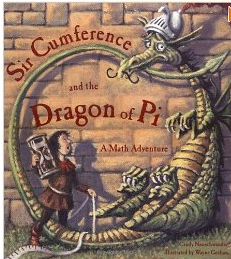
I would also share the book Sir Cumference and the Dragon of Pi (A Math Adventure)
by Cindy Neuschwander


For for a deeper look into pi, there is The Joy of Pi by David Blatner.


Or how about Pi Day online greeting cards- http://www.123greetings.com/events/pi_day/
To top off the day, we would celebrate by eating...pie.


image: flickr/djwtwo

So many fun resources online to celebrate Pi Day or my birthday.
(It is also Einstein's birthday, but that's for another post.)

Monday, October 4, 2010

Conversations about Ed Reform

I've been reading and listening to podcasts this week about the buzz on Education Reform brought about by NBC and Oprah. The opening of the movie Waiting for Superman has brought on a flurry of conversations and opinions. The President's speech on the State of Education only added to the pot. Charter schools. Bill Gates. Will this/he reform Education? Are teachers motivated by these conversations? Are teachers inspired by Oprah's interviews? Are teachers walking out of the movie pumped up for Monday morning? Probably not, because in a movie about education, we actually hear very little about reforming teaching and learning. You can throw money at it, change the name, bring in truck loads of technology, but if we're still teaching the same way we did 10, 20, 50 years ago.... nothing will change. Loved the inspiring article on changing the entire program with a new design model by Diana Rhoten at Startl. It's not the teacher's it the system.

Wednesday, September 15, 2010

Reflections on State of Education Interview

On Sept. 27, 2010, Matt Lauer interviewed President Obama on the state of Education in the Nation. There were many generalizations but the larger issues talked about were; removal of poor teachers, charter schools, math and science scores, longer school year, quality and preparation of teachers, parent accountability and more. See transcript- http://today.msnbc.msn.com/id/39378576/ns/today-parenting/ Are we seeing true reform in any of these areas? I'm encouraged when I hear the President speak on education, but I want to see examples. Where are the charter schools making a difference? Why can't we model that? Why don't we remove poor performaing teachers? This is a complicated answer, I know. How about teacher's salaries? Good teachers don't stay because they are often tempted with a better paying job and can we really raise a family on a teacher's salary? I believe President Obama does have a good perspective on the state of education in our nation. Of course he doesn't have all the answers, but in the end he continues to talk about it and bring attention to the needs. Keep the conversations going.

Sunday, April 18, 2010

Plants are Perfect!


Spring! What teacher doesn't love it? Days are getting warmer, flowers are blooming, we're getting closer to summer break....I especially love this time of year for teaching science. Get the kids outside and be environmentalists and biologists. I will admit, life cycles are my favorite units to teach. Here are some great interactive websites for teaching plant parts and plant life cycles.

  1. BBC- Bitesize interactives- Parts of a Flower
  2. University of Illinois- Trees are Terrific
  3. WI.gov Environmental Education- Eek! Dichotomous Tree Key
  4. For Interactive Whiteboards- Life Cycle of Plants
image- http://creativecommons.org/ http://www.flickr.com/photos/jenessalynn/990650008/

Tuesday, April 6, 2010

Digital Natives and Immigrants...Again!

In preparing for my M/AT, ED 5210 Educational Technology, I'm reading some articles and blog posts related to this discussion topic. After candidates read Marc Prensky's article that defined this issue, they investigate into other's opinions in the teaching/technology field. We look at Jamie McKenzie article "Digital Nativism" and find quite a contrast in thinking. I do this exercise with both undergraduate and graduate students. As you can imagine, the "older" group is typically highly agitated by Prensky's comments. I find myself agreeing with principal, Chris Lehmann, who responded in 2007, but is still applicable. How do we engage students to do hard work and think deeply? These are the questions good teachers should be asking.

Tuesday, March 2, 2010

Keeping Wordle Safe in the Classroom

After sharing Wordle.net with teachers in my preservice courses and at ICE 2010 conference, I've had several primary teachers ask how to make wordle safe and appropriate for their students. Here's a link to the blog of the creator of wordle.net, Jonathan Feinberg, where he answers that question.

Tuesday, February 23, 2010

Tuesday, February 16, 2010

iPad in the Classroom

http://tinyurl.com/yjgl9rk

I'm starting to see the benefits in a classroom. I'd love it alone for all the Apple Apps that can be downloaded. Many of the apps are free. I'm looking forward to how teachers will use them in the classrooms. Lots of possibilities!

Wednesday, February 10, 2010

Etherpad...brought to you by Google


http://etherpad.com
Love it. Google owns it. I will be using it in my classes live and virtually. No account necessary. Similar in nature to Twiddla.com . I observed a spanish class at Caruso Middle School in Deerfield, IL, where students were communicating in spanish on their netbooks to others. They didn't know who they were chatting with, but they had to ask and answer questions, in spanish.

Tuesday, November 3, 2009

Too Young to Tweet?

After reading about kidswirlcom, a social networking site for kids, I am wondering if there is truly a way to know how this early use of social networking affects brain development. I am looking for REAL research. The age limit on other SN sites (facebook, myspace) were initially put in place due to safety/protection reasons. If that weren't an issue, is this idea of "infantilizing the brain" valid? I use social networking sites regularly. I guess the "fit" I threw last night over my children not eating the wonderful dinner I made is connected to my use of FB & twitter. Truthfully though, as an mom and educator, I'm interested in good research in this area.
http://tinyurl.com/ygjnazt


Tuesday, October 20, 2009

Girls Love Legos, Too

Legos, love them. Why is it that when I am in the "Lego" aisle, all I see are Legos marketed to boys? (Indiana Jones, Bionicles, Star Wars, etc.) I am a mom of 3 girls that would like to see LEGO reach out to this market. If not for the families that want more options than pirates and astronauts, why not do it for the image of the LEGO company. Girls need opportunities to play with mathematical and engineering concepts in a non-academic arena. Many girls need more opportunities to develop left-brain activities. I'm the one spending the money and I say "if you build it, I'll buy it."

Thursday, October 15, 2009

An Old Friend is New Again

I love WebQuests. I've had a love for them from as early as the late 1990's, when I was first exposed to them. They were an engaging, high-level thinking, web-based activity that I used with my students. I have to admit, they were time consuming to make, but the good ones were well worth the investment. How can anything from the 90's be relevant to technology integration today? Well, because the focus isn't on the technology. I also used Hyperstudio back then. That is dated. But Hyperstudio (another love) was a technology tool, easily replaced with the next best multimedia tech tool. WebQuests, however, is a lesson structure that allows students to think critically, solve problems, collaborate and use internet resources wisely. Sounds like 21st century skills to me. Whatever the new term is. WebQuests are still relevant.

Wednesday, September 9, 2009

Who's to Blame?

Which comes first, the technology or the pedagogy? Good question. So often I see the tech tool coming before best practice. Many of the new teachers are tech-savvy, but lack the pedagogy and so we end up with these digital natives that don't know how to integrate the technology into their curriculum. Preservice education needs to address this. Desperately.

Sunday, May 31, 2009

Caruso Webio


Graphic from wordle.net

I love this visual word picture of the content that is on Ms. Hansen's blog. It is exactly what's been happening in her classroom. A web 2.0 classroom.

Wednesday, May 13, 2009

A Whole New Mind

I am completely engaged in the book A Whole New Mind: Why Right-Brainers Will Rule the World by Daniel Pink. Pink describes a shift in the knowledge-based economy to a more creative, empathic and non-linear conceptual age. It is an easy read and quite a breath of fresh air. Coming from the education world, it's about time we learn to acknowledge the creative side of learning/thinking. We need to embrace more "right-brain" skills in our schools and classrooms. (creating, producing, inventing, designing, composing, etc) Check it out. A Whole New Mind: Why Right-Brainers Will Rule the Future

Wednesday, April 8, 2009

Google Gadgets

At google, you can find many gadgets to add to your blog.